60k Dobbeltravern Trail Run Near Oslo
In September 2021 I ran the Dobbeltravern, a 60 kilometer out-and-back trail ultra through the Nordmarka forest north of Oslo, on a total of zero trail-running preparation and a few Snickers bars from the grocery store. I finished in just over six hours. This report is for anyone who gets talked into a race like this on short notice: watch your navigation, and know that the first half is entirely unsupported.
I will go over before the race, the race itself, and advice for anyone else doing this.
Before the race
I was in Oslo for work, staying with a colleague, Atle Bjørnerud: a very impressive ultra athlete in his fifties who still runs 100-milers for fun. He mentioned he was doing an ultra trail run that weekend, the Nordmarkstravern, and that there was also a shorter 30 kilometer option I could join. Of course I couldn’t let that go, so I signed up for the same distance he was doing: the 60 kilometer “Dobbeltravern” (“double travern”), which is just the 30k Nordmarkstravern run twice, out and back.
I hadn’t done much trail running before this, though I had finished a full Ironman not long before, so I figured the fitness would carry over. My preparation consisted of borrowing a pair of trail shoes and a couple of soft flasks from Atle, and a trip to the grocery store for Snickers bars. That was it.
The Nordmarkstravern is normally a 30 kilometer point-to-point run from outside Oslo into the city. The Dobbeltravern adds the 60k option by simply running out to that start line and back again, which matters more than it sounds: it means the entire outbound half runs through a course that isn’t actually race day yet for anyone else.
The race
We started early in the morning with about 24 competitors, all Norwegian. The best decision I made all day was to stick with Atle: he had done this before and knew how to follow the route, while a group of fast Norwegian runners in expensive sunglasses did not. They overtook us right at the start, then kept getting lost and dropping back behind us again, overtaking us more than once over the course of the day. If you run this race, the first lesson is simple: watch your routing. Getting lost costs far more energy than it looks like it should.
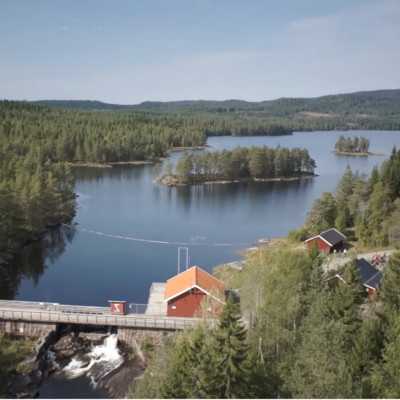
The second lesson follows from the course design. Because the Dobbeltravern’s first 30 kilometers are, on paper, just the road out to where the “real” 30k race starts, none of the food stations were set up yet when we ran through. There’s also nobody around: it’s Norwegian forest, no villages, no spectators on the sides. You are entirely self-reliant for that first half, which is exactly why I’d brought the Snickers bars, and exactly why you want a GPS track rather than trusting the markings.
Atle set a great pace and I just followed. Somewhere around the halfway point we reached the actual start line of the 30k race: I saw a row of buses and didn’t immediately register that we’d arrived, until people started shouting at us that we could turn around. So we turned around, and the second 30 kilometers began, this time on an actual race course with aid stations.
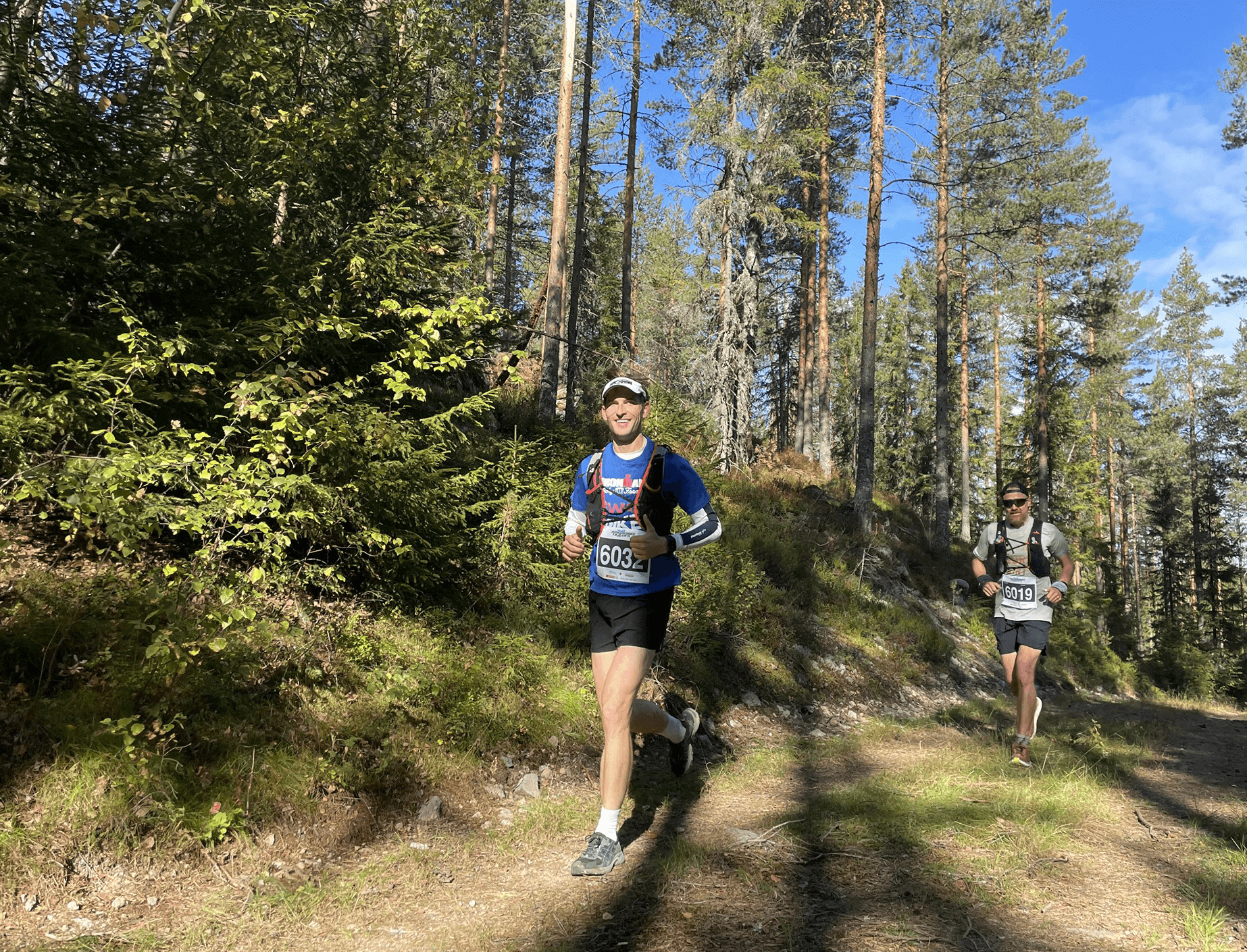
The most beautiful stretch of the whole route is around the 15 kilometer mark of that second half: a bit of a climb, rocky underfoot but grassy at the edges, in and out of the shade of pine trees. If you’re doing this race for the scenery as much as the challenge, that’s the section to actually slow down and look around in.
From there Atle pulled ahead and I let him go rather than blow up chasing him. I finished the 60 kilometers in just over six hours; he finished just under six hours, about 20 minutes ahead of me. I hadn’t done many marathons, let alone ultras, at that point, so I was completely broken walking back to my Airbnb that night. Still, it’s one of the more memorable races I’ve done, and I’d recommend it to anyone who ends up in Oslo with a free weekend and a similarly reckless colleague.
Advice for anyone doing this race
- Bring or follow a GPS track. The faster runners around us only stayed faster on paper; in practice they lost more time to wrong turns than we ever gained by pace. Don’t rely on markings alone.
- Treat the first 30k as fully unsupported. No aid stations, no villages, no one on the course but you. Carry your own food and water for the outbound leg regardless of what the official race description implies about aid station spacing.
- Pace off someone who knows the course, if you can. Atle’s local knowledge and pacing were worth more than any training I could have crammed in beforehand.
- Enjoy the climb around the 15k mark of the return leg. It’s the best scenery on the route and easy to miss if you’re just grinding through it.
Comments